Introduction
With the SaaS industry booming, knowing exactly what your potential customers want can make or break your success. According to Statista, the global SaaS market size is expected to surpass $200 billion by 2024, highlighting fierce competition and rapid innovation. In this crowded space, understanding your customers’ real needs is not just helpful—it’s essential.
A market research questionnaire is one of the most effective tools to uncover genuine SaaS demand. It allows you to collect targeted insights directly from your audience, validating ideas and avoiding costly missteps. Whether you’re launching a new feature or entering a fresh market segment, a well-designed questionnaire can reveal what drives user behavior and preferences.
In this article, we will explore the importance of a market research questionnaire for SaaS products, walk you through key steps to create one, highlight essential questions to include, and share tools to streamline the process. By the end, you’ll be equipped to craft a questionnaire that uncovers actionable insights to fuel your SaaS product’s success.
 Team collaboration around a market research questionnaire encourages valuable SaaS demand insights.
Understanding the Purpose of a Market Research Questionnaire
A market research questionnaire is a structured set of questions designed to collect data about a target audience’s opinions, preferences, and behaviors. For SaaS products, it specifically helps uncover user needs, validate demand, and identify pain points that your software can solve.
Unlike other research methods such as interviews or focus groups, questionnaires allow you to reach a broad audience quickly and quantitatively analyze responses. This scalability is crucial for SaaS businesses aiming to understand diverse customer segments and make data-driven product decisions.
Moreover, a questionnaire can be tailored to address specific aspects of SaaS demand, such as feature preferences, pricing sensitivity, or competitor usage. This targeted approach helps teams avoid assumptions and build solutions grounded in real user feedback.
By investing time in crafting a thoughtful market research questionnaire, SaaS companies gain clarity on what truly matters to their customers, enabling smarter product development and marketing strategies.
Key Steps to Create an Effective Market Research Questionnaire for SaaS Demand
 Checklist of essential steps for crafting a market research questionnaire tailored to SaaS demand.
Creating a market research questionnaire that delivers meaningful SaaS demand insights requires a methodical approach. Here are the key steps to guide you:
Define Clear Objectives
Before writing any questions, you must pinpoint what you want to learn. Clear objectives keep your questionnaire focused and relevant. For SaaS demand research, objectives might include:
- Identifying the most desired features
- Understanding pricing sensitivity and budget constraints
- Exploring current pain points with existing solutions
- Measuring interest in potential new product ideas
For example, if you want to know whether users prefer a monthly subscription or annual billing, your objective is to gauge pricing preferences. Clearly defined goals help you avoid vague or irrelevant questions that dilute response quality.
Identify Your Target Audience
Knowing who you want to survey is crucial. SaaS users can be segmented by demographics (age, job role), firmographics (company size, industry), and user behavior (frequency of software use, feature adoption).
For instance, a project management SaaS might segment respondents into freelancers, SMB teams, and enterprise users. Tailoring questions to these segments increases the relevance and accuracy of your findings.
Understanding your target audience also helps with distribution—whether through email lists, social media, or SaaS communities—to ensure responses come from the right people.
 Segmenting your SaaS audience by demographics and behavior ensures targeted questionnaire insights.
Choose the Right Question Types
Selecting appropriate question formats influences the quality of your data. Common question types include:
- Multiple choice: Easy to analyze and great for quantifying preferences (e.g., preferred features).
- Likert scale: Measures intensity of opinions or satisfaction (e.g., rate usefulness on a scale of 1 to 5).
- Open-ended: Provides qualitative insights and unexpected feedback (e.g., "What features would you like to see?").
Each type has pros and cons. Multiple choice offers clarity but can limit nuanced responses, while open-ended questions take longer to analyze but uncover deeper insights. A balanced mix is ideal for SaaS demand research.
 Choosing the right question types unlocks diverse SaaS demand insights.
Craft Clear and Unbiased Questions
Clarity is key to avoid confusion or bias. Use simple language, avoid jargon, and keep questions neutral to prevent leading respondents toward particular answers.
Good question example: "What features would improve your workflow in our software?"
Bad question example: "Don’t you agree that adding feature X would make our software better?"
Also, avoid double-barreled questions that ask two things at once, such as "How satisfied are you with the pricing and features?" Instead, separate these into individual questions to get precise answers.
Keep It Short but Comprehensive
Respect your respondents’ time by keeping the questionnaire concise. Aim for 5-15 minutes to complete, which typically translates to 10-20 well-crafted questions.
A shorter questionnaire improves completion rates and reduces survey fatigue while still capturing comprehensive data. Prioritize questions that directly align with your objectives and cut any that feel redundant.
Pilot Test Your Questionnaire
Before full launch, pilot test your questionnaire with a small group of SaaS users or colleagues. This helps identify confusing questions, technical issues, or missing answer options.
Collect feedback on the overall experience and make necessary adjustments. Pilot testing improves reliability and ensures your questionnaire effectively reveals SaaS demand.
Essential Questions to Include in a SaaS Market Research Questionnaire
A well-rounded questionnaire covers several key areas to validate demand and gather actionable insights:
- Demand validation questions:
- "How frequently do you use SaaS tools in your daily work?"
- "What is your biggest challenge with current software solutions?"
- "How urgent is the need for a solution like ours on a scale of 1-10?"
- Feature prioritization questions:
- "Which features are most important to you? (Select up to 3)"
- "What additional features would you like to see?"
- Pricing and budget considerations:
- "What pricing model do you prefer? (Monthly, annual, pay-as-you-go)"
- "What is your typical budget for SaaS tools per month?"
- Competitor usage and satisfaction:
- "Which similar SaaS products do you currently use?"
- "What do you like or dislike about these products?"
- Open-ended questions for qualitative insights:
- "What improvements would make you switch to a new SaaS product?"
- "Any other feedback or suggestions?"
Including a mix of quantitative and qualitative questions provides a holistic view of demand and user expectations.
Tools and Platforms to Create Your Market Research Questionnaire
Creating your market research questionnaire is easier than ever thanks to numerous user-friendly platforms:
- Google Forms: Free, easy to use, integrates with Google Sheets for data analysis.
- Typeform: Engaging, conversational forms with beautiful designs, ideal for higher response rates.
- SurveyMonkey: Robust survey features, advanced analytics, and templates tailored for market research.
When selecting a tool, consider features like customization options, analytics capabilities, ease of sharing, and mobile responsiveness. Your choice should align with your budget and technical comfort level.
 Popular tools like Google Forms, Typeform, and SurveyMonkey simplify questionnaire creation and analysis.
For more on survey tools, check out HubSpot's guide to the best survey software and SurveyMonkey’s tips on questionnaire design.
Analyzing and Acting on Questionnaire Data
Once you collect responses, interpreting the data is the next crucial step. Quantitative data from multiple choice and Likert scale questions can be analyzed with basic statistics to identify trends, averages, and common preferences.
Qualitative data from open-ended questions requires thematic analysis—grouping similar responses to find recurring themes or ideas. This often uncovers nuanced insights that numbers alone cannot show.
Use these insights to:
- Validate if there is genuine SaaS demand for your product or feature
- Prioritize development based on feature preferences and pain points
- Adjust pricing models to match customer budgets and expectations
- Identify gaps in competitors’ offerings to exploit
For example, if many respondents highlight onboarding difficulties with competitors, investing in a smooth onboarding experience could be a winning differentiator.
 Analyzing questionnaire data uncovers actionable insights to refine your SaaS product strategy.
For deeper data analysis techniques, explore resources like Google Analytics for survey data or The Balance Small Business’s guide on survey analysis.
Conclusion
A well-crafted market research questionnaire is a powerful tool to reveal authentic SaaS demand. By following clear objectives, targeting the right audience, choosing effective question types, and analyzing data thoughtfully, you can gain invaluable insights that steer your product in the right direction.
Applying these steps helps you avoid costly assumptions, prioritize features your users truly want, and optimize pricing strategies, ultimately saving time and resources. Market research is not just a box to check—it’s a strategic asset for SaaS success.
Start designing your questionnaire today, and watch how data-driven decisions transform your SaaS offering.
 Applying market research insights empowers SaaS marketers to create impactful products.
This article incorporated insights from Statista, HubSpot, SurveyMonkey, and The Balance Small Business to ensure you get the most actionable advice.
🧠 Featured SaaS Idea Generator: SaaSThink
If you’re looking for a tool that simplifies idea generation, validation, and MVP planning, check out SaaSThink.
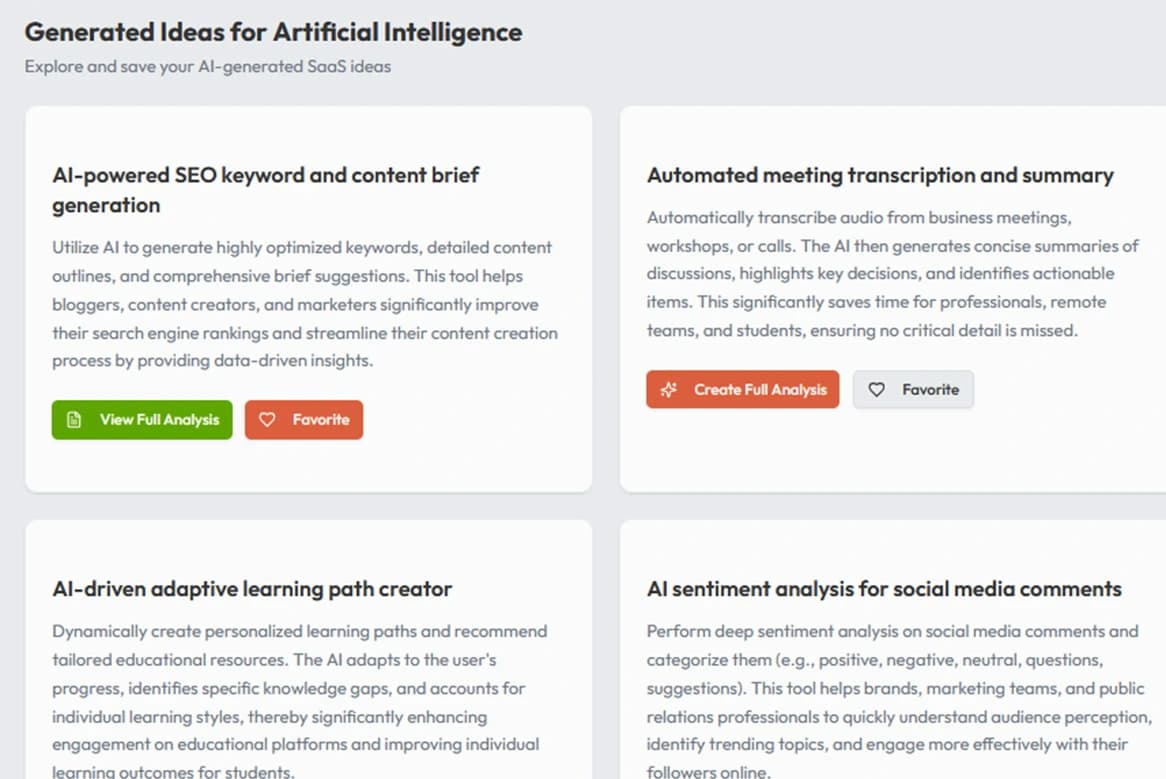
SaaSThink is an intuitive, AI-powered saas idea generator that helps founders:
-
Generate startup ideas based on industry + pain point
-
Discover naming suggestions for brandable domains
-
Get MVP feature outlines and monetization guidance
-
Focus on validated, low-competition ideas that solve real problems
Whether you’re a beginner exploring options or an experienced builder ready to launch your next tool, SaaSThink bridges the gap between inspiration and execution.
🔗 Learn more at: SaaSThink